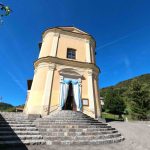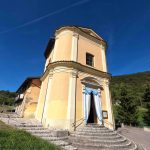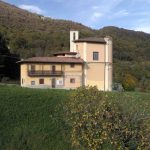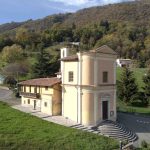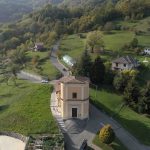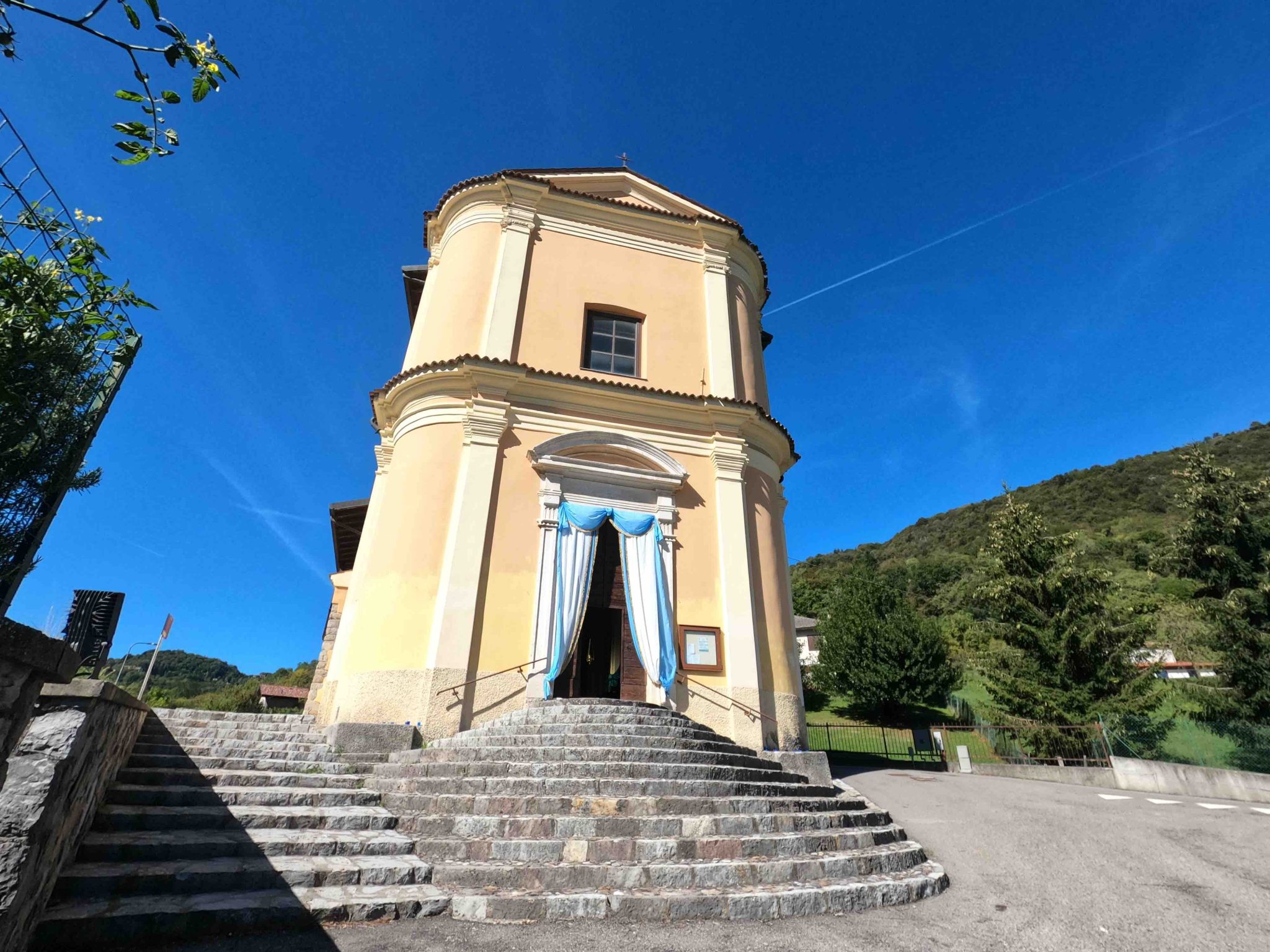
Situated in the hamlet of Trate, the church is preceded by a spectacular flight of steps, comprising numerous steps arranged in a pattern of concentric arcs.
The façade, simple yet harmoniously structured, is organised into two orders. The main section is flanked by two pilasters and features, at its centre, a portal in Zandobbio marble, surmounted by an elegant curved pediment. The second order, also framed by two pilasters, is characterised by a window that illuminates the interior of the building. Above the crowning cornice, a triangular pediment completes the façade’s composition, giving it a balanced and orderly profile.
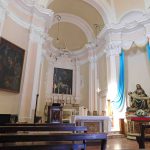
The interior is laid out around a single octagonal nave, covered by a ribbed vault. Four spandrels open out from the vault: three house the respective windows, whilst the fourth leads towards the triumphal arch. The chancel, narrower than the nave, is covered by a vault and culminates in the choir, characterised by an apse.
Dominating the back wall of the choir is a large stucco altarpiece, within which hangs the painting of Our Lady of Sorrows. Beneath the altarpiece stands a lacquered and painted wooden altar. On the side of the chancel, a door framed in Zandobbio marble leads to the sacristy.
From a structural point of view, the building is constructed of continuous masonry and features a complex system of vaults and floors. The floor plan is characterised by a single octagonal nave; the chancel, which is narrower and rectangular in shape, opens onto the semi-circular choir.
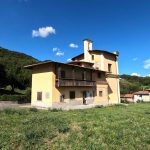
The external roof consists of a pitched roof with a timber supporting structure and a covering of clay roof tiles.
Between 1980 and 1990, following the directives of the Second Vatican Council, a communal altar was introduced for the celebration of Mass facing the congregation. This addition was incorporated into the chancel area without replacing the historic 19th-century altar, crafted from carved, painted and gilded wood, which retains its presence as a significant element of the liturgical furnishings.
HISTORICAL NOTES:
– 16th century – 1677: A work written by Calvi (Effemeride Sagro Profana di quanto sia successo in Bergamo sua Diocese et Territorio) in 1677 states that in the territory of Gaverina there were three newly built (or recently restored) oratories, including that of Trate, which at the time was dedicated to the Annunciation;
– 1703: in this year, Bishop Luigi Ruzini, finding the church in a state of complete disarray, declared it closed until it had been restored;
– 1710 – 1713: the parish priest, Don Bernardo Suardi, planned the reconstruction of the building, having abandoned the old one, which was considered too cramped;
– 1737 – 1740: in 1737, the parish priest, Don Giacomo Bettoli, raised the vault and, in 1739, fitted the door. On 24 August 1740, Don Bettoli himself consecrated the church;
– 1799: a severe subsidence of the ground caused significant cracks running from top to bottom across the façade.
Source: Le chiese delle diocesi italiane, https://chieseitaliane.chiesacattolica.it/chieseitaliane/